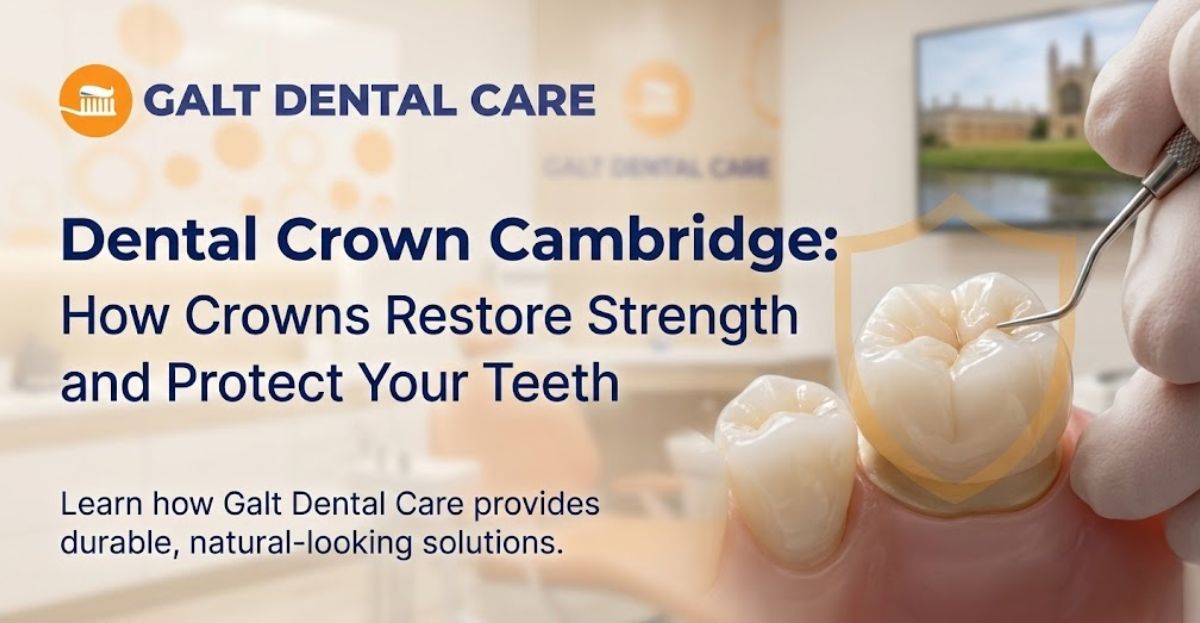
A damaged or weakened tooth can affect both oral health and daily comfort. Cracks, large cavities, or wear over time may reduce the strength of a tooth and increase the risk of further damage. In many situations, dentists recommend a dental crown to restore the tooth and protect it from additional problems.
For patients searching for dental crown Cambridge, understanding how crowns work and when they are recommended can help reduce uncertainty about treatment. Modern restorative dentistry focuses on preserving natural teeth whenever possible. A dental crown is one of the most effective ways to reinforce a compromised tooth while restoring its natural appearance and function.
When carefully designed and properly maintained, a crown can support long-term oral health and help patients maintain a strong, comfortable smile.
What Is a Dental Crown?
A dental crown is a custom-made cap that covers the visible portion of a damaged tooth. The crown restores the tooth’s shape, strength, and appearance while protecting the remaining natural structure.
According to the American Dental Association (ADA), crowns are commonly used to restore teeth that have been weakened by decay, fractures, or large fillings. They also play an important role in restorative treatments following root canal therapy.
Dental crowns can be made from several materials, including:
Porcelain or ceramic
Porcelain fused to metal
Zirconia
Gold or metal alloys
Each material offers specific advantages in terms of durability, aesthetics, and strength. Dentists recommend the most suitable option depending on the location of the tooth and the patient’s bite.
When Do You Need a Dental Crown in Cambridge?
Dentists may recommend dental crown Cambridge treatment when a tooth becomes too damaged for a simple filling but can still be preserved.
Common reasons for crown placement include:
Severe Tooth Decay
When a cavity removes a large portion of the tooth structure, a filling may not provide enough support. A crown helps reinforce the remaining tooth.
Cracked or Fractured Teeth
A crown can stabilize a cracked tooth and prevent the fracture from worsening.
After Root Canal Treatment
Teeth treated with root canal therapy often become more fragile. Placing a crown protects the tooth and restores its ability to withstand chewing forces.
Large Dental Fillings
When an existing filling becomes too large or the tooth structure weakens, a crown can provide better long-term support.
Cosmetic Improvements
Crowns can improve the appearance of teeth that are discolored, worn, or misshapen.
Many patients in Cambridge, Ontario choose dental crowns because they provide both structural protection and aesthetic improvement.
Types of Dental Crowns
Advances in dental materials have made crowns more durable and natural-looking than ever before.
Porcelain or Ceramic Crowns
Porcelain crowns closely mimic the appearance of natural teeth. Dentists often recommend them for front teeth where aesthetics are especially important.
Porcelain Fused to Metal Crowns
These crowns combine the strength of metal with the appearance of porcelain. They provide a balance between durability and aesthetics.
Zirconia Crowns
Zirconia crowns are known for their exceptional strength and resistance to wear. They are frequently used for back teeth where chewing forces are strongest.
Metal Crowns
Metal crowns, including gold alloys, are extremely durable and resistant to fracture. Dentists sometimes recommend them for molars because they can withstand heavy biting pressure.
Your dentist will recommend the most suitable material based on your individual oral health needs.
The Dental Crown Procedure
Understanding the crown placement process can help patients feel more confident about treatment.
Initial Examination
The dentist begins with a detailed examination of the tooth and surrounding tissues. Dental X-rays may be taken to evaluate the condition of the tooth and underlying bone.
Tooth Preparation
The dentist carefully reshapes the tooth to create enough space for the crown. Any decay or damaged tissue is removed during this stage.
Digital Scans or Impressions
The dentist takes impressions or digital scans of the prepared tooth. These measurements ensure that the final crown fits accurately.
Temporary Crown Placement
A temporary crown may be placed to protect the tooth while the permanent crown is fabricated in a dental laboratory.
Final Crown Placement
Once the permanent crown is ready, the dentist checks its fit, color, and bite alignment before bonding it securely to the tooth.
Patients receiving dental crown Cambridge treatment usually complete the process in two visits, although some clinics now offer same-day crowns using digital technology.
Benefits of Dental Crowns
Dental crowns offer several important advantages for restoring damaged teeth.
Strengthening Weakened Teeth
A crown provides structural support and allows the tooth to function normally during chewing.
Protecting Teeth from Further Damage
By covering the entire tooth, a crown shields weakened enamel from additional fractures or decay.
Restoring Natural Appearance
Modern crown materials closely match the color and shape of natural teeth, improving the appearance of a smile.
Supporting Long-Term Oral Health
Restorative treatments such as crowns help preserve natural teeth, which supports proper bite alignment and jaw function.
The Canadian Dental Association (CDA) emphasizes that preserving natural teeth whenever possible remains a key goal of modern dentistry.
How Long Does a Dental Crown Last?
Dental crowns are designed to last many years when properly maintained. Their longevity depends on several factors, including oral hygiene, biting habits, and the material used.
Many crowns function successfully for 10 to 15 years or longer with proper care.
Dentists recommend routine checkups to ensure the crown remains secure and the surrounding tooth structure stays healthy.
Caring for a Dental Crown
Although crowns are durable, good oral hygiene remains essential for long-term success.
Patients can protect their crowns by following these habits:
Maintain Daily Oral Hygiene
Brush twice daily and floss carefully around the crown to remove plaque and bacteria.
Avoid Excessive Pressure
Avoid chewing hard objects such as ice, pens, or hard candies, which may damage dental restorations.
Attend Regular Dental Checkups
Routine dental visits allow dentists to monitor the crown and detect any issues early.
Address Bite Problems Promptly
If the crown feels uneven or uncomfortable while chewing, a dentist can make small adjustments to improve comfort.
Organizations such as Health Canada recommend preventive dental care and regular checkups as essential steps for maintaining oral health.
Dental Crown Cambridge: Choosing the Right Dental Team
Selecting an experienced dental provider plays an important role in successful crown treatment.
A professional dental practice will focus on:
thorough diagnosis and treatment planning
evidence-based restorative techniques
patient comfort and clear communication
long-term preventive care
Patients seeking dental crown Cambridge services often benefit from clinics that provide comprehensive dental care and modern restorative technology.
Conclusion
Dental crowns are a reliable and widely used solution for restoring damaged or weakened teeth. By covering and protecting the natural tooth structure, crowns help restore strength, improve appearance, and maintain normal chewing function.
If you experience tooth damage, discomfort when biting, or visible cracks, seeking dental evaluation early can prevent more serious complications. For individuals looking for dental crown Cambridge, professional assessment and timely treatment can help preserve natural teeth and support long-term oral health.
With proper care, regular dental visits, and guidance from an experienced dental team, dental crowns can provide lasting protection and help maintain a healthy smile.
About the Author
This article was written by the clinical team at Galt dental care, a trusted family dentistry practice serving Cambridge, Ontario. Galt dental care provides comprehensive dental care for patients of all ages — from children’s first visits to senior oral health management. Our team is committed to evidence-based care, patient education, and making every visit as comfortable as possible for the whole family.
Frequently Asked Questions
Is getting a dental crown painful?
Dentists use local anesthesia during the procedure to ensure patient comfort. Most patients experience minimal discomfort during crown placement.
How long does it take to get a dental crown?
Traditional crown placement usually requires two appointments, though some dental clinics offer same-day crowns using digital technology.
Can a dental crown fall off?
Crowns are securely bonded to the tooth, but they may loosen over time due to wear or underlying tooth changes. If this happens, contacting your dentist promptly is important.
Can I eat normally with a dental crown?
Yes. Once the permanent crown is placed and properly adjusted, most patients can chew and eat normally.