A Damaged Tooth Doesn't Always Mean a Lost Tooth
There's a moment many dental patients know well — you bite down on something and feel an unexpected crunch, or you catch your reflection and notice a tooth that looks cracked, discoloured, or just wrong. The fear that follows is understandable. But here's what most people don't realize: a damaged or weakened tooth doesn't automatically mean extraction.
In many cases, a dental crown is exactly what saves it.
At Galt Dental Care in Cambridge, Ontario, dental crowns are one of the most frequently recommended and most effective restorative procedures we offer. They protect vulnerable teeth, restore full function, and when done well, look completely natural. This guide explains everything you need to know — clearly, honestly, and without the clinical jargon.
What Is a Dental Crown?
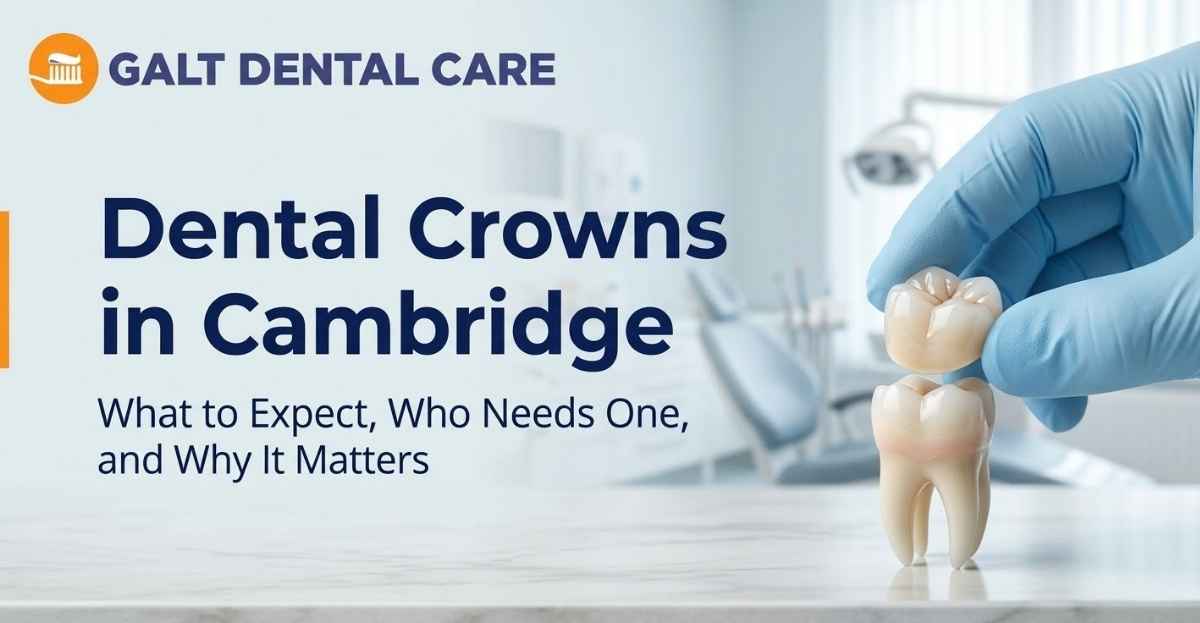
A dental crown is a tooth-shaped cap placed over a damaged, weakened, or cosmetically compromised tooth. It encases the entire visible portion of the tooth — from the gum line upward — restoring its shape, size, strength, and appearance.
Crowns are used for a wide range of clinical situations and are considered one of the most versatile tools in restorative dentistry. According to the Canadian Dental Association (CDA), crowns are a well-established, evidence-based treatment for protecting and restoring teeth that can no longer be adequately repaired with a filling alone.
Who Actually Needs a Dental Crown?
Not every damaged tooth requires a crown, and a trustworthy dentist will always recommend the most conservative treatment appropriate for your situation. That said, certain clinical conditions make a crown the right — and often only — long-term solution.
Common reasons for a dental crown in Cambridge:
After a root canal. A tooth that has undergone root canal therapy loses much of its internal structure. Without a crown to reinforce it, the tooth becomes brittle and prone to fracture. Crowning a root canal-treated tooth significantly extends its lifespan.
Severe decay or a large failing filling. When decay is extensive, or when an existing filling has weakened or cracked the surrounding tooth structure, a filling replacement may not be structurally adequate. A crown provides full-coverage protection.
A cracked or fractured tooth. Cracks can propagate with chewing forces. A crown holds the tooth together, preventing the crack from deepening and potentially causing tooth loss or the need for extraction.
A worn-down tooth. Chronic teeth grinding (bruxism) can wear teeth to the point where normal function and bite alignment are affected. Crowns can rebuild worn teeth to their proper height and shape.
Cosmetic restoration. Severely discoloured, misshapen, or structurally compromised teeth that cannot be improved with bonding or veneers alone may be candidates for crown placement.
As part of a dental bridge or implant restoration. Crowns anchor dental bridges and cap dental implants, making them essential components in tooth replacement treatment.
Types of Dental Crowns: Which Material Is Right for You?
Crown material selection is a clinical and aesthetic decision made collaboratively between patient and dentist. At Galt Dental Care, we explain all options clearly so you can make an informed choice.
Porcelain crowns (all-ceramic)
The most aesthetic option. Porcelain crowns mimic the translucency and colour of natural tooth enamel, making them virtually indistinguishable from surrounding teeth. They are the preferred choice for front teeth, where appearance is the priority. Modern ceramic materials, including zirconia-based crowns, are also highly durable.
Porcelain-fused-to-metal (PFM) crowns
These crowns combine a metal substructure with a porcelain exterior. They offer a good balance of strength and aesthetics and have been used reliably in dentistry for decades. However, the metal margin can sometimes show as a dark line near the gumline over time, which makes them less ideal for highly visible front teeth.
Full metal (gold or alloy) crowns
Metal crowns are exceptionally strong and wear-resistant. They require the least amount of tooth structure removal and are gentler on opposing teeth. While not the most aesthetically appealing, they remain an excellent clinical choice for back molars where biting forces are greatest and visibility is minimal.
Zirconia crowns
Zirconia is a newer and increasingly popular crown material that offers the strength of metal with the aesthetics of ceramic. It's highly biocompatible, which is important for patients with metal sensitivities. At Galt Dental Care, we frequently recommend zirconia for patients who want both durability and a natural appearance.
The Dental Crown Procedure: Step by Step
Understanding what happens during crown placement reduces anxiety and helps you know exactly what to expect at each appointment.
Step 1: Examination and treatment planning
Your dentist conducts a thorough oral examination, reviews X-rays, and assesses the tooth's condition. If the tooth requires a root canal or other treatment first, that is completed before crown preparation.
Step 2: Tooth preparation
The tooth is reshaped under local anaesthetic to create space for the crown. The amount of tooth structure removed depends on the crown material selected. An impression or digital scan of the prepared tooth is then taken.
Step 3: Temporary crown placement
A temporary crown protects the prepared tooth while your permanent crown is being fabricated — typically at a dental laboratory. This stage generally takes one to two weeks.
Step 4: Permanent crown placement
At your second appointment, the temporary crown is removed, and the permanent crown is checked for fit, bite, and colour match before being permanently cemented into place.
Some practices with in-office CAD/CAM (computer-aided design and manufacturing) technology can complete crowns in a single appointment. Ask the Galt Dental Care team whether same-day crown fabrication is available for your case.
How Long Do Dental Crowns Last?
With proper care, dental crowns typically last between 10 and 15 years, and many last significantly longer. The American Dental Association (ADA) notes that crown longevity depends on oral hygiene practices, bite forces, and whether habits like grinding or ice-chewing are present.
To extend the life of your crown:
- Brush twice daily with a soft-bristled toothbrush and fluoride toothpaste
- Floss carefully around the crown margin every day
- Avoid chewing ice, hard candy, or other extremely hard foods
- Wear a night guard if you grind your teeth
- Attend regular professional cleanings and checkups every six months
Dental Crown Cost in Cambridge, Ontario
Crown costs vary depending on the material chosen, the complexity of the case, and the individual dental practice. In Ontario, porcelain and ceramic crowns generally fall within the range outlined by the Ontario Dental Association (ODA) Fee Guide, which provides a transparent reference point for dental fees in the province.
Many dental insurance plans in Canada provide partial coverage for dental crown cambridge when they are deemed medically necessary. Galt Dental Care's team is happy to review your specific insurance plan, provide a predetermination of benefits, and discuss flexible payment options to make treatment accessible.
Why Cambridge Patients Choose Galt Dental Care for Crowns
A dental crown is a long-term investment in your oral health. The quality of the preparation, impression, material selection, and final placement all directly affect how long your crown lasts and how comfortable it feels.
At Galt Dental Care, our restorative dentistry approach is grounded in:
- Thorough clinical assessment before recommending any crown
- Clear explanation of all material options and associated costs
- Precision tooth preparation to preserve as much natural tooth structure as possible
- Rigorous quality checks on fit, bite, and aesthetics before cementation
- Ongoing support and follow-up to ensure your crown remains comfortable and functional
We serve patients across Cambridge — including the Galt, Preston, and Hespeler communities — and welcome new patients of all ages.
Frequently Asked Questions About Dental Crowns
Does getting a dental crown hurt?
The procedure is performed under local anaesthetic, so the tooth preparation itself should be painless. Some sensitivity or mild discomfort in the days following placement is normal and typically resolves on its own.
Can a crowned tooth still get a cavity?
The crown itself cannot decay, but the tooth underneath can. Bacteria can accumulate at the crown margin — the junction between the crown and gumline — making proper brushing and flossing essential even after crown placement.
Is a crown the same as a cap?
Yes. "Dental cap" and "dental crown" are used interchangeably. Both refer to the same full-coverage restorative restoration.
What happens if I delay getting a crown?
Delaying a recommended crown allows the underlying damage to progress. A cracked tooth can fracture to the point of being unsalvageable. A weakened, root-canal-treated tooth can break. Early treatment is almost always less invasive and less costly than emergency treatment later.
Conclusion
A dental crown is more than a cosmetic fix — it's a clinically sound, long-lasting solution for protecting and restoring teeth that would otherwise be lost. Whether you're recovering from a root canal, dealing with a fractured tooth, or replacing a worn-down molar, the right crown, placed well, can give that tooth decades more of healthy function.
If you're in Cambridge and wondering whether a crown is right for you, the most important step is a proper examination with a dentist you trust. At Galt Dental Care, we take the time to explain your options, answer every question, and recommend only what's genuinely in your best long-term interest.
Book your consultation today and take the first step toward a stronger, healthier smile.