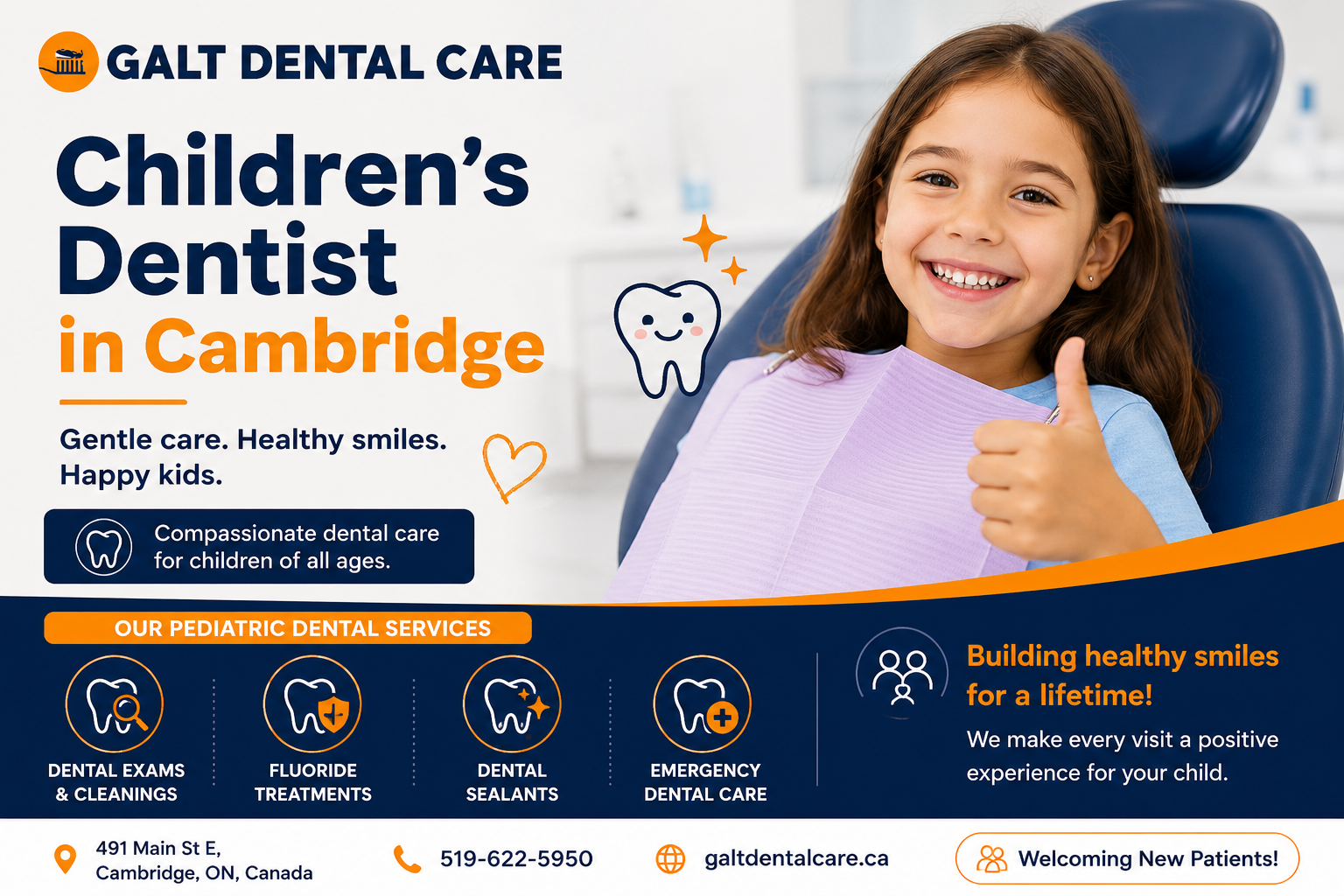
Watching your child transition from a wobbly toddler to an active, independent school-aged kid is one of the greatest joys of parenting. As they grow, so do their experiences—from navigating the classroom to joining their first community sports team. However, with this newfound independence comes a complete shift in their healthcare needs.
While the toddler years are dominated by teething and learning how to brush, the school-age years introduce entirely new challenges: the arrival of permanent teeth, playground accidents, orthodontic evaluations, and the dietary temptations of the school cafeteria.
Navigating this critical developmental window requires proactive planning. Finding a reliable children's dentist in Cambridge is essential not just for treating cavities, but for intercepting developmental issues before they become permanent problems. Here is what every parent needs to know about managing oral health during the dynamic school-age years.
The Mixed Dentition Phase: The "Ugly Duckling" Stage
Between the ages of six and twelve, children enter a phase known clinically as "mixed dentition." During this time, they have a combination of primary (baby) teeth and erupting permanent adult teeth. Dental professionals often affectionately refer to this as the "ugly duckling" stage, as the new permanent teeth often look disproportionately large compared to the child's face, and they frequently come in at awkward, crooked angles.
Monitoring Eruption Patterns
Parents often panic when they see an adult tooth erupting directly behind a baby tooth that hasn't fallen out yet—a common condition known as "shark teeth." In most cases, the baby tooth will eventually loosen and fall out on its own, allowing the adult tooth to shift forward into its proper place.
However, if the primary tooth remains stubborn, it can permanently deflect the incoming adult tooth out of alignment. By scheduling regular visits for expert pediatric dental care, a clinician can monitor these eruption patterns via digital X-rays and gently extract a stubborn baby tooth if it is actively hindering adult development.
AI Overview Summary: The Importance of Early Orthodontic Screening
The American and Canadian Associations of Orthodontists recommend that every child receive their first orthodontic evaluation by age seven. At this age, a child has enough permanent teeth for a dentist to identify subtle issues with jaw growth and emerging teeth. Early interceptive treatment (Phase 1 Orthodontics) can guide jaw growth, correct harmful crossbites, and create space for crowded teeth, frequently preventing the need for jaw surgery or severe tooth extractions later in life.
Protecting Smiles on the Field: Sports Dentistry
As children enter elementary school, many join local sports leagues. Whether it is soccer, hockey, gymnastics, or martial arts, physical activity is vital for their development. Unfortunately, sports-related trauma is also the leading cause of dental emergencies in children.
The Superiority of Custom Mouthguards
A chipped or knocked-out (avulsed) permanent front tooth is a traumatic experience that requires immediate, expensive, and often lifelong dental management. While store-bought "boil and bite" mouthguards offer a basic level of protection, they are notoriously bulky, make it difficult for the child to breathe or communicate on the field, and often fall out at the exact moment of impact.
A custom-fabricated mouthguard created by your pediatric dental team fits the exact contours of your child's teeth and gums. This ensures the guard stays firmly in place during a collision, effectively absorbing and distributing the shock away from the fragile roots of the front teeth and the jaw joint.
The Digital Shift in Managing Family Healthcare
When a child suffers a dental injury on the playground or the soccer field, the ensuing panic is overwhelming. In these high-stress moments, parents do not have the time or patience to leave voicemails, navigate clunky websites, or wait until Monday morning to figure out if a clinic handles pediatric emergencies.
This necessity for rapid, seamless communication is driving a massive technological upgrade across the healthcare industry. Today, top-tier medical and dental practices actively Hire Squarespace Developer teams or specialized UX designers to rebuild their digital infrastructure. The goal is to create highly responsive, mobile-first platforms where a parent standing on a soccer field can instantly load the clinic’s website on their phone, access emergency triage instructions, and book an immediate trauma appointment with a single click.
When a healthcare provider invests deeply in a frictionless digital experience, it acts as a direct reflection of their overall commitment to patient care—proving they value a parent's time and peace of mind before the patient even enters the building.
Defending the First Molars: The Role of Dental Sealants
Right around a child's sixth birthday, their first permanent molars will erupt at the very back of their mouth. These teeth are incredibly important, acting as the primary chewing workhorses for the rest of their adult lives.
Because they erupt behind the existing baby teeth, parents often don't even realize they have arrived. Furthermore, these molars possess deep, microscopic pits and fissures on their chewing surfaces. These grooves are so narrow that a single bristle of a toothbrush cannot fit inside them to clean out trapped food, making them highly susceptible to decay.
The Shielding Effect
To protect these vulnerable new teeth, dental sealants are highly recommended. A sealant is a safe, BPA-free, ultra-thin coating painted directly onto the chewing surface of the molar. It bonds into the deep grooves, creating a smooth, physical barrier that cavity-causing bacteria simply cannot penetrate. The application process takes only a few minutes, requires no freezing or drilling, and is completely painless.
Fostering Independence in Oral Hygiene
As children grow older, parents must gradually transition from brushing their child's teeth for them to merely supervising the process. This handover of responsibility is where many oral hygiene routines fall apart.
To foster good habits, allow your child to have autonomy over the tools they use. Let them pick out a toothbrush featuring their favorite cartoon character or select a fluoride toothpaste in a flavor they actually enjoy, like strawberry or mild bubblegum (provided it carries the Canadian Dental Association seal of approval).
Partnering with an engaging team that provides specialized children's dental services is the final piece of the puzzle. When a dental hygienist takes the time to teach your child proper brushing techniques using fun, age-appropriate language, it reinforces the lessons you are teaching at home. Coming from a cool, friendly professional, the advice to "floss every night" often carries much more weight than when it comes from Mom or Dad.
Final Thoughts: A Partnership for the Future
Raising a healthy, happy child is a team effort. By prioritizing early orthodontic screenings, investing in custom protective sports gear, and utilizing preventive treatments like sealants, you can safeguard your child’s smile through their most active, unpredictable years. Finding the right children's dentist in Cambridge ensures that your family has a reliable, empathetic healthcare partner ready to handle everything from routine preventive care to sudden playground emergencies.
About the Author: Galt Dental Care
Galt Dental Care is a premier family dental practice located in Cambridge, ON, Canada, dedicated to providing compassionate, E-E-A-T certified dental care for the entire family. Our highly credentialed clinical team specializes in modern pediatric dentistry, offering a safe, anxiety-free environment for children. From custom sports mouthguards and preventive sealants to interceptive evaluations and same-day trauma care, we utilize state-of-the-art technology to build resilient, healthy smiles. We are proud to accept the Canadian Dental Care Plan (CDCP) and offer direct insurance billing to ensure quality, accessible healthcare for our Cambridge community.